Friday, January 30, 2026

Transforming Perfume Pagoda into a vibrant tourist hub

Footprint Travel - The Perfume Pagoda National Special Monument Complex (Huong Son scenic area) in Huong Son commune (Hanoi) is not only a typical cultural and spiritual space of the capital but also a destination with great potential. With a new approach and many specific solutions, Huong Son commune is now gradually shifting towards the goal of welcoming visitors year-round.

Many untapped opportunities remain.

The Huong Son historical and scenic site is a typical cultural and spiritual complex of Hanoi and the whole country. It was classified as a Special National Monument in 2017 and recognized as a city-level tourist area in 2024. With its outstanding historical, scenic, and religious value, it has long been a familiar destination for domestic and international tourists.

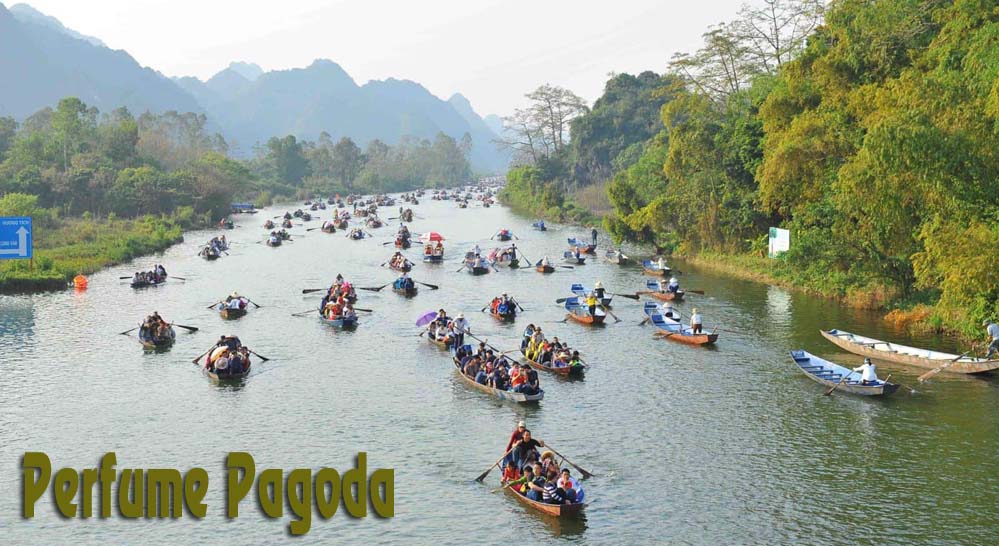
Every year, the Perfume Pagoda Festival takes place from the beginning of spring until the end of March in the lunar calendar, attracting tens of thousands of pilgrims and tourists, becoming one of the biggest festival highlights of Hanoi as well as the whole country. Beyond its cultural and spiritual significance, the festival also plays an important role in promoting the economic and social development of the locality.

According to data from the Huong Son Scenic Area Management Board, the number of visitors has fluctuated significantly in recent years. Statistics from the Huong Son Scenic Area Management Board predict that Huong Son will welcome over 860,000 visitors in 2025. However, in reality, tourism in Huong Son has remained largely seasonal, peaking during festivals, while remaining relatively quiet during the rest of the year. The challenge is how to more effectively exploit existing values and gradually transform Huong Son into an attractive year-round destination, rather than just a vibrant destination during the short festival season.

Regarding the limitations preventing Huong Son tourism from fully exploiting its potential, Vice Chairman of the People's Committee of Huong Son commune - stated that the shortcomings include inadequate and degraded transportation infrastructure , limited parking and boat docks, a lack of diverse tourism products, insufficient interconnected tour routes, and unprofessional promotion and digital technology application. Accommodation and food services are seasonal; and the local community has not yet fully embraced innovation trends and professional service standards.

Opportunity for a breakthrough

With tourist numbers still concentrated mainly during the festival season, Huong Son commune's overarching strategy is to effectively exploit its tourism resources, focusing on cultural and spiritual tourism linked to sustainable development. With a new approach and many specific solutions, Huong Son commune is gradually shifting towards the goal of welcoming visitors year-round, exploiting the expansive tourism space throughout the area with its rich system of historical sites such as the Perfume Pagoda route, Thanh Son Pagoda, Huong Dai Cave, Long Van Pagoda, Cay Khe Pagoda, Ancient People's Cave, and Tuyet Son Pagoda.

In the coming time, the locality will continue to implement many comprehensive solutions to renew products and enhance the attractiveness of the destination. The focus will be on developing unique seasonal tourism products, including the Perfume Pagoda experience program during the frangipani flower season. At the same time, a unified, easily recognizable, and widely disseminated brand identity for Perfume Pagoda tourism will be developed. Cuisine is identified as an important resource that needs to be systematically exploited and promoted, linked to the local agricultural products, creating unique culinary experiences for tourists.

Contributing to the development of tourism at Perfume Pagoda, he suggested creating one-day or two-day package tours suitable for international tourists. The local government is ready to promote the image of Perfume Pagoda to the international market through experiential tours combining sightseeing at Yen Stream, visiting Thien Tru Pagoda, experiencing traditional peanut candy making, and harvesting and using local medicinal herbs. A product needs to be clear and in-depth enough to tell the story of the destination.

According to Hanoi Department of Tourism, Perfume Pagoda has recently undergone significant and comprehensive changes, reflected in the renovation of its space and innovations in the management and administration of the destination. Following the initial renovation process, Huong Son commune will continue to invest in depth in Perfume Pagoda, ensuring the synchronized development of infrastructure, products, and service quality.

From the initial steps in beautifying and innovating destination management, it is clear that Huong Son is facing a breakthrough opportunity to more clearly define its year-round tourism development strategy, linking heritage preservation with enhancing the visitor experience.

For Perfume Pagoda to truly become a year-round destination, the journey of revitalization shouldn't just stop at refreshing products or renovating spaces. It requires the sustained collaboration of the government, businesses, and local communities in preserving the landscape, improving service quality, and telling the heritage story in an attractive and modern way. When cultural, spiritual, natural, and culinary values are harmoniously, deeply, and responsibly explored, Perfume Pagoda will not only be a pilgrimage site in early spring but will gradually become a year-round destination for experiences.

Source: https://footprintvietnamtravel.com/news/transforming-perfume-pagoda-into-a-vibrant-tourist-hub.php

Discovering the hidden charm of Bac Hoa hamlet in Bac Giang

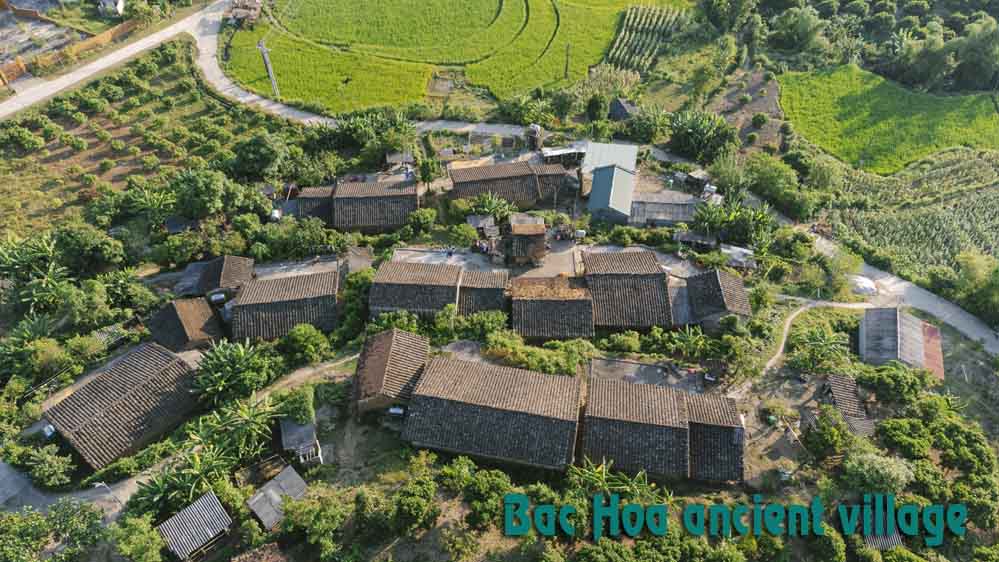
Asiatica Travel - Bac Hoa, the name of a beautiful village, is the first impression of a land that further attracts travelers from afar. Bac Hoa belongs to Tan Son commune, Luc Ngan district, Bac Giang province - a place where small houses with earthen walls and charming yin-yang tiled roofs nestle against the lush green hillsides, belonging to the Nung ethnic people.


The journey from Bac Giang city to Bac Hoa takes about an hour by car. The route from Bac Giang city to Bac Hoa via the Tay Yen Tu spiritual route is quite convenient (except for the currently degraded section of Highway 31). After arriving at Chu town, continue on Highway 31 to the Kep intersection in Hong Giang commune, then turn onto Provincial Road 290, travel about 15km, and then continue for about 7km on Highway 279, the section connecting Bac Giang to Dinh Lap district in Lang Son province. Passing through the center of Tan Son commune, Luc Ngan district – where the Tan Son love market is held annually – turn off Highway 279 and travel about 2km on the paved road to reach Bac Hoa.

Bac Hoa is as beautiful as a mountain girl, simple, rustic, and poetic… Along the road are lush green hills, with houses hidden among rolling hills of lychee trees. Standing out against the verdant hills are the houses with their yin-yang tiled roofs, leaving a lasting impression on those who have the chance to visit Bac Hoa. Right along the main road into the village are rows of ancient houses with earthen walls, making everyone want to stop and admire them. Seventeen families live here, mostly relatives, forming a small hamlet. The houses are almost seamlessly connected; you can step directly from one house to another, or the boundaries are only marked by shared pathways, hedges of trees and stacked stones, or patches of wildflowers… All 17 families here still maintain the traditional style of earthen-walled houses with yin-yang tiled roofs, evoking a connection between the present and the past.

Beside the traditional earthen house, Mrs. Vi Thi Them, an 80-year-old woman from the village, still sits by her loom weaving indigo-dyed scarves to sell to her ethnic group for use during spring festivals… This image evokes the idea that traditional cultural values will endure through time. In Bac Hoa, there is also a Slong Hao singing club with over 30 members. Mr. Lang Quoc Ky, the vice chairman of the club, said that the club still holds activities and exchanges, and every year, in the first two months of the year, the club members dress up in their traditional costumes and go to Tan Son market to participate in the singing festival, preserving the culture of their ancestors.

The entire Bac Hoa village has over 160 households, 100% of whom are Nung people. The villagers live scattered across the hillsides, cultivating agriculture, growing fruit trees, and a small area of rice and short-term vegetable crops. The lives of the villagers have gradually improved over the years, but traditional culture has faded somewhat. In recent years, there has been increased awareness of preserving traditional culture. The village now has a Slong Hao singing club, and the teaching of folk songs has become more conscious among the villagers. During spring festivals, the sight of people wearing indigo shirts and scarves at the market creates a unique atmosphere of the highland market. The traditional houses with yin-yang tiled roofs are also preserved by the villagers.

Mr. Vi Van Cheo, head of Bac Hoa village, said: "Recently, Bac Hoa has received many visitors, including researchers exploring the culture and tourists who appreciate the scenery and people of Bac Hoa. Most visitors share the same feeling about Bac Hoa's beauty and hospitality. Tourists are quite interested in the tour experiencing the fruit orchards, the traditional Chu noodle production village, and Bac Hoa. However, the services here are not yet diverse, so visitors can only come for a day trip and there are no services for overnight stays. This is also a concern for the tourism industry in Bac Giang and Luc Ngan district..."

To attract tourists to Bac Hoa and other potential destinations in Luc Ngan, comprehensive investment in infrastructure, accommodation, and accompanying tourism products and services is essential. Simultaneously, a strategy to enhance the image and promotion of these destinations is needed so that Luc Ngan in general, and Bac Hoa in particular, become widely known to tourists.

Source: https://asiaticatravel.com/travellers-eyes/exploring-the-unspoiled-beauty-of-bac-hoa-ancient-village.asp

Sunday, January 25, 2026

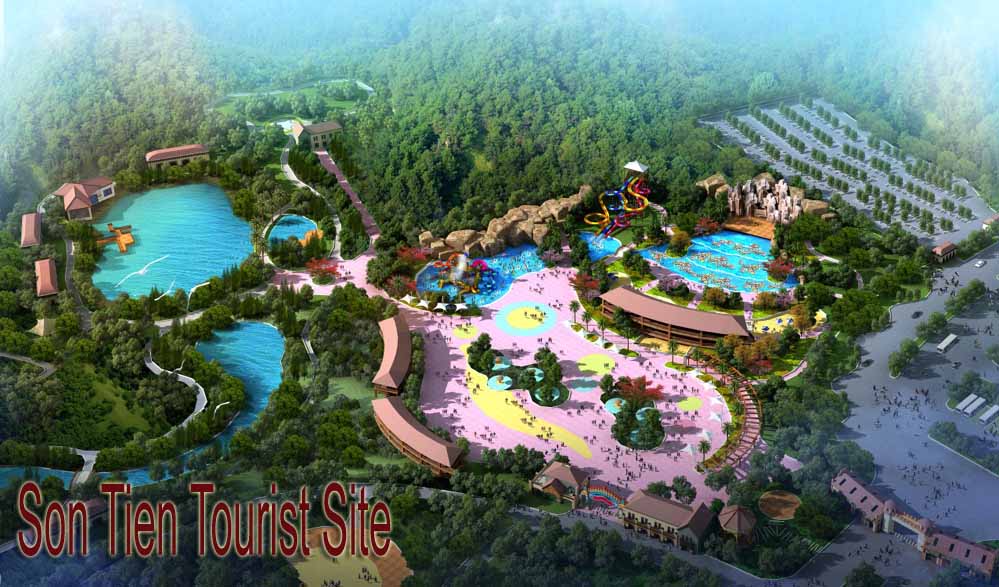
Free entrance tickets await at Son Tien tourist city

Vietnam Impressive Travel - To celebrate the opening of the Southeast Vietnam tourist area, Son Tien tourist city (Dong Nai province) is giving away 20,000 free entrance tickets and free train rides to visitors.


Amidst the growing demand for relaxing spaces close to nature, Son Tien's promotional program has become a focal point. With 20,000 vouchers offering free entrance tickets and train rides, Son Tien aims to provide a meaningful gift to visitors from January 10th to February 16th. This is an opportunity for locals and tourists to experience this "green oasis" spanning over 50 hectares without any cost.

The Southeast Vietnam Tourist Area impresses with its more than 50 hectares of land, where trees cover the pathways and interwoven landscaped lakes create a cool ecosystem year-round. Instead of walking, visitors can leisurely ride on modern trains to tour the lush green Southeast Vietnam, admiring the abundant beauty of this southern region.

This is the ideal destination for weekend strolls or family picnics. Free from noise and pollution, here you'll find only the gentle breeze and the subtle fragrance of plants and trees, giving you a true sense of returning to nature the moment you arrive.

One of the most popular activities here is visiting and experiencing fruit picking directly from the orchards. With nearly 100 varieties of fruit trees cultivated using organic technology, visitors can personally harvest fresh, delicious seasonal fruits such as peony grapes, American figs, golden star apples, French black candy grapes, red-fleshed jackfruit, rambutan, ST plums, etc.

Besides experiencing the orchards, visitors can participate in a variety of exploratory activities: stroll or cycle on the 8.2 km long pedestrian bridge winding through the trees, enjoying the panoramic view of the vast green space. In addition, kayaking, swan pedal boating, or canoeing on the picturesque lakes also attract many visitors.

At Son Tien, the diverse range of restaurants, serving everything from rustic Southern Vietnamese specialties to authentic Asian and European cuisine, is ready to satisfy every diner, providing moments of complete enjoyment and "recharging" for a day of exciting activities.

With its convenient location on National Highway 51 and green spaces, Son Tien tourist city in the Southeast region promises to be an attractive destination for tourists in the near future.

Source: https://impressivevietnamtravel.com/news/detail/666/discover-green-oasis-of-son-tien-in-dong-nai.html

Unlock Tho Chu island potential with new ferry service

Ethnic Travel - The Phu Quoc to Tho Chu high-speed sea transport route has officially commenced operations, helping to shorten travel time between the two islands and creating more favorable conditions for travel, tourism, and trade.


The route is operated by Superdong - Kien Giang High-Speed ??Ferry Joint Stock Company using the Superdong V vessel, with a total tonnage of 85 tons and a capacity of 275 passengers. The vessel operates from Monday to Saturday every week, with a frequency of one trip per day.

According to the schedule, the outbound trip from Phu Quoc operates on Mondays, Wednesdays, and Fridays; the ship departs from Bai Vong port at 10:30 AM. The return trip from Tho Chu operates on Tuesdays, Thursdays, and Saturdays; the ship departs from Tho Chu Inland Waterway Port at 8:00 AM.

With this high-speed ferry service, travel time between Phu Quoc and Tho Chu is shortened to approximately 2 hours and 30 minutes per trip, covering a distance of over 60 nautical miles; the ticket price is 330,000 VND for adults and 240,000 VND for children.

According to the People's Committee of Tho Chu Special Economic Zone, the launch of the high-speed ferry service aims to meet the increasing demand for transportation, facilitate the transport of goods, develop tourism and services, and serve the medical, educational, and work needs of the people, officials, and soldiers on the island.

Previously, travel between Phu Quoc and Tho Chu relied mainly on the infrequent Tho Chu 09 ferry, which had long journey times and was frequently interrupted due to weather conditions in the Southwest Sea.

Improved connectivity is expected to open up opportunities for the development of island and coastal tourism, making it easier for tourists to access Tho Chu Island - an island that still retains much of its pristine beauty - while also promoting the transportation of seafood, agricultural products, and consumer goods, contributing to reduced logistics costs and creating momentum for the development of the marine economy in the region.

Source: https://ethnictravelvietnam.com/Travel-News/high-speed-ferry-service-bridges-phu-quoc-and-tho-chu-islands/