Thursday, April 2, 2026

Quang Tri unveiled where peaks kiss rivers in eternal beauty

Footprint Travel - Located in the central part of the country, with the narrowest width, backed by the Truong Son mountain range and facing the East Sea, Quang Tri has been blessed by nature with many mountains and rivers. The natural formations have shaped the rivers and mountains, gathering the spiritual energy of heaven and earth, becoming symbols of each region.


Non Mai, also known as Mai Linh Mountain, is located on the right bank of the upper reaches of the Thach Han River, within the complex of Dong Tran, Dong Chan, north of Dong Che, and south of Dong Che, with an altitude of over 800m above sea level. Mai Linh Mountain is located within the Dakrong Nature Reserve, in the former Mo O commune, now Huong Hiep commune. "The mountain has a rounded, slightly pointed conical shape, sloping more towards the west-east. At the summit there is a flat area of land, currently covered only with reeds and bushes" (excerpt from "Studies on Quang Tri in the Past" by Le Duc Tho).

In early April 2025, the Quang Tri Provincial Special Forest Management Board announced the discovery of an ancient apricot blossom forest with over 300 trees, hundreds of years old, located within the pristine forest of the Non Mai-Song Han area. The existence of this ancient apricot blossom forest further enhances the value and uniqueness of this scenic spot.

The Thach Han River is the largest river in the southern part of the province, originating at an altitude of 700m in the mountainous region of the Western Truong Son Mountains, with a length of approximately 156km. Cua Viet is where the Thach Han River flows into the sea. In 1836, the image of the Thach Han River was carved on the Thuan Dinh in the The Mieu Temple, Hue Imperial Citadel. The Dai Nam Nhat Thong Chi (Comprehensive Gazetteer of Dai Nam) records: "Located in the area of Thuan Xuong and Hai Lang districts. The source is in La But, flowing northwest for more than 40 miles, then flowing another 30 miles to Ai Tu district, where the water from Vien Kieu flows in…" The Thach Han River, along with Non Mai, is close and familiar, gradually becoming deeply ingrained in the consciousness of the people and becoming a cultural symbol of the southern region of Quang Tri.

Non Mau - Be Hac

Mount Dau Mau, 783 meters high, is located in Le Ky village, Quang Ninh commune. Its shape resembles the peak of a spearhead, hence its name. The Dai Nam Nhat Thong Chi (Comprehensive Gazetteer of Dai Nam) records: "Located 22 miles west of Phong Loc district, within the territory of Le Ky commune. The mountains are numerous and densely forested, majestic and pointed, resembling a spearhead, hence its name. Legend says there is a well beside the mountain, containing a strange fish; the foot of the mountain rests on the Nhat Le River, where there are many stone crabs". In 1631, Lord Nguyen Phuc Nguyen entrusted Dao Duy Tu and Nguyen Huu Dat with the construction of the Dinh Bac Great Wall, stretching from Mount Dau Mau to the Nhat Le estuary. This strong military defense line helped prevent attacks from the Trinh army, allowing the Nguyen lords to expand their territory southward.

Located not far to the east of Dau Mau Mountain lies Hac Hai Lagoon (meaning "shallow sea"). Hac Hai Lagoon is a brackish lagoon in the former Quang Ninh and Le Thuy districts, covering an area of ??over 7,000 hectares. It serves as both a water regulating reservoir and a source of aquatic products and a habitat for various bird species. The brackish water ecosystem here has created a rich source of produce, providing an abundant food supply for the local people. The majestic and imposing mountain range, with Hac Hai Lagoon to the southeast, has led to a folk saying: "Dau Mau Mountain is the pen, Hac Hai Lagoon is the inkstone, Truong Sa is the sheet of paper". This symbolizes a land of culture and learning, with a tradition of academic excellence and examinations.

Len Bang - Gianh River

Len Bang is located near the Gianh River in Tuyen Hoa commune. The book Dai Nam Nhat Thong Chi (Comprehensive Gazetteer of Dai Nam) records: "Located more than 70 miles west of the district, in Thanh Thuy village, the rocks are piled up in a square shape like a blackboard, hence the name. To the west is near Kim Linh mountain, and to the south are all rocky mountains ". Before the development of science and technology, fishermen used Len Bang as a "lighthouse" on land to determine direction when going out to sea. Many legends surround Len Bang. It is said that at night, a flickering light shines on the rock, and if the faint sound of children studying is heard, then a talented person will appear.

The Gianh River is 160km long, originating from the 2,017m-high Co Pi mountain range, from Giang Man mountain in the Truong Son mountain range, and converging from three sources: Rao Nay, Rao Nan, and Son at La Ha village before flowing into the East Sea. Characterized by its wide channel and deep riverbed, the river is sometimes calm but becomes fierce and dangerous during the rainy season. Located near the sea, with its banks far apart and strong winds, the Gianh River's strategic location has formed a natural defensive line separating the interior from the outside world.

Throughout history, the Gianh River has had various names such as Dai Linh Giang and Linh Giang. The book Dai Nam Nhat Thong Chi describes it as: "Located three miles south of Binh Chinh district, north of Binh Chinh district, and south of Bo Trach district, it is also called Thanh Ha ". The river's water remains clear year-round, hence its name Thanh Ha. During the Trinh-Nguyen conflict, the Gianh River served as the boundary separating Dang Trong and Dang Ngoai. In the 17th year of Minh Mang's reign (1836), when casting the Nine Dynastic Urns, the image of the Gianh River was engraved on the Chuong urn. In the 4th year of Thieu Tri's reign (1844), the king ordered the erection of a stone stele on the southern bank of the river. The sacredness and mystique of the Gianh River attracted many communities to settle there, forming prosperous and cultured villages along its banks, as the saying goes: "Mountains, Rivers, Scenery, and Land".

Phoenix Mountain - Loan River

The Hoanh Son mountain range is called Phoenix Mountain by the people of Roon region. The mountain is over 50km long, running in a northwest-southeast direction; from the west to the East Sea at Ngang Pass. In the past, Hoanh Son served as a natural border between Dai Viet and Champa. Currently, the ruins of the ramparts of Lam Ap, built by King Pham Van in the 4th century, still remain on the Hoanh Son range. A section of this rampart stretches through the mountains and forests in Phu Trach commune. When Nguyen Hoang sent someone to inquire about Nguyen Binh Khiem's plans for refuge, he received a prophecy that Hoanh Son, a single stretch, can provide refuge for generations. Hoanh Son mountain is also depicted on the Huyen dinh (Mysterious Peak) in the Nine Tripods. The majestic and captivating beauty of the Hoanh Son landscape has been immortalized in the works of famous figures and poets, most notably the poem "Crossing Ngang Pass" by Ba Huyen Thanh Quan.

The Roon River is called the Loan River by the people in the northern Quang Trach area. During the Northern domination period, this river was called the Do Le River. The river has two tributaries: the Thai River and the Can River. The Can River, the main tributary, originates in Thuong Tho in the Hoanh Son mountain range and is about 30km long. The Thai River originates from streams in the Da Bac cave at the foot of Phoenix Mountain. The lower part of the Thai River runs southeast and merges with the Thai River at the Thai Bridge area. From here, the river flows through the communes of Phu Trach and Hoa Trach before emptying into the sea through the Roon estuary. The Loan River and Phoenix Mountain were once described by ancient poets in a captivating way: " Loan River is long, Phoenix Mountain is majestic / Rabbits run, birds fly, the sun and moon are long".

The Loan River not only provides water for daily life and production but also brings abundant aquatic resources. The Phoenix Mountain and the Loan River here are likened to a loving couple, creating a beautiful landscape.

Of the nine major mountains and nine major rivers depicted on the Nine Dynastic Urns, Quang Tri province has two mountains, Dau Mau and Hoanh Son, and two rivers, Thach Han and Gianh. These place names are not only associated with the history of the Nguyen dynasty, but also bear special historical imprints from the glorious and turbulent years of the nation.

The harmonious blend of sky and earth, mountains and rivers, creates the majestic beauty of our homeland. The masterpieces of nature's mountains and waters have shaped this land into a sacred place, embodying the unique character of each region. The mountain-river pairings of nature – Non Mai Mountain and Han River, Dau Mau Mountain and Hac Hai Lagoon, Bang Cliff and Gianh River, Phuong Mountain and Loan River – further enhance the beauty of Quang Tri's landscape.

Source: https://footprintvietnamtravel.com/news/quang-tri-land-where-mountains-and-rivers-weave-history-and-beauty.php

Your guide to Quang Ngai's magical Bau Ca Cai

Asiatica Travel - You don't need to travel all the way to the far reaches of the Mekong Delta; right here in Quang Ngai , there's a mangrove forest called Bau Ca Cai that's as beautiful as poetry, captivating countless tourists.


Bau Cai Cai is a mangrove forest located in Thuan Phuoc village, Binh Thuan commune, Binh Son district, about 40km northeast of Quang Ngai city center.

Initially, this area was just a protective forest to act as a wave barrier and improve the ecological environment. However, due to its exceptionally picturesque scenery and to improve the lives of the coastal residents, the Vietnamese government collaborated with the Green Climate Fund (GCF) to develop it into an eco-tourism area. Now, it has become a must-visit destination for tourists visiting Quang Ngai. 

The Bau Ca Cai eco-tourism area is located at the foot of unique, bowl-shaped mountains, and the scenery here will surprise you just as much. It covers a total area of 110 hectares, of which 60 hectares are planted with mangrove trees and 50 hectares with white hog plum trees.

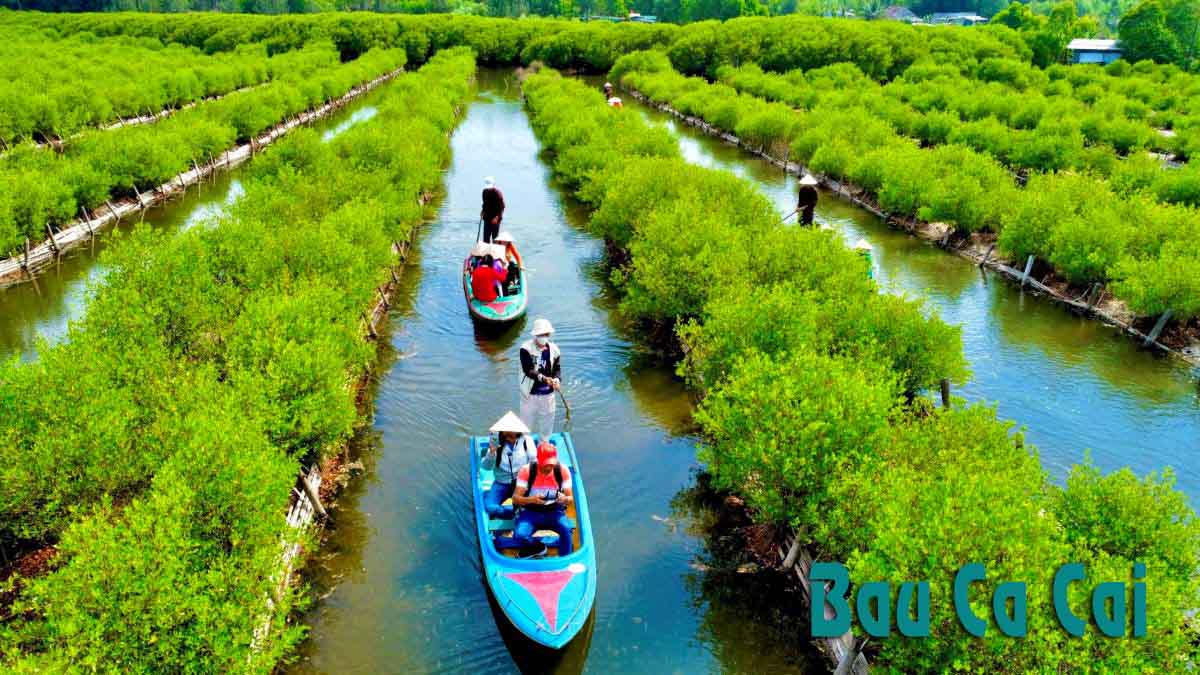
The mangrove forest is notable for its rows of trees, approximately 100-200 meters long, planted neatly in a straight line, with each row spaced about 4-10 meters apart to allow easy boat access. When viewed from above, it resembles a carefully planned urban area, which is extremely impressive.

Unmissable activities at Bau Ca Cai

Take a scenic boat trip.

The most enjoyable activity that everyone must try when visiting Bau Ca Cai in Quang Ngai is renting a boat from the locals to admire the scenery of the forest. The feeling of gliding through the green canopy, being enveloped in the fresh, clean air of the trees, and listening to the chirping of birds echoing from within the bushes will surely leave you utterly captivated.

Furthermore, during your boat trip, you can also admire flocks of white birds, egrets, and wild ducks filling the sky, as if even the clouds want to descend to chat and converse with the tourists. 

In particular, the locals here are extremely friendly and hospitable. They act as both boatmen and highly professional local guides, not only taking you to the most beautiful spots but also sharing the ancient origins of each location, all with bright smiles on their faces. That's why anyone who visits Bau Ca Cai in Quang Ngai is reluctant to leave.

Taking beautiful photos

Another special feature that makes the Bau Ca Cai mangrove forest so attractive is that every nook and cranny, every spot here is a perfect photo spot for those who love taking pictures: from the intertwined branches that resemble an archway to the soft, fluffy reeds, or even the bamboo fences that locals use to raise fish and shrimp... all can create photos that will garner thousands of likes.

Experience the authentic life of the local people.

This area is an ideal environment for the growth of shrimp, crabs, fish, snails, etc., so it would be really interesting to join the locals in casting nets, using traps or seines to catch seafood. Afterwards, you can bring it back and prepare delicious dishes yourself using the unique recipes and spices of the local people. With such abundant ingredients, you're guaranteed to have a wide variety of dishes to choose from.

In addition, Bau Ca Cai in Quang Ngai  also has corn fritters – a famous Quang Ngai specialty that you definitely have to try.

Camping

After enjoying the scenery to your heart's content, you can head ashore to set up your tent. This activity allows you to witness a breathtaking sunset over the water and gaze at the starry sky, like the Milky Way, by a crackling campfire. You can drift off to sleep to the cheerful sounds of frogs and crickets, and wake up to the melodious chirping of birds in the early morning.

This could be a fantastic experience, but it's only suitable for those who enjoy exploring new things and challenging themselves, as the area is quite remote and security isn't very good. Of course, you must bring your own tent, tarp, and food, and camping is only allowed in large groups, and it's especially only possible during the dry season.

The ideal time to visit Bau Ca Cai

Each season,  Bau Ca Cai in Quang Ngai  has a different beauty: in spring, the trees sprout new leaves and buds, their white blossoms like flickering flames warming the land. When summer arrives, the vibrant green of the trees, water, and sky blend together to create a refreshing and lively picture.

As autumn arrives, the leaves gradually turn yellow and fall, creating a romantic scene reminiscent of Korean dramas. But perhaps the most unique time is late autumn and early winter, when almost all the leaves have fallen, leaving behind bare, white branches, as if covered in snow, leaving everyone amazed and astonished. Especially, the climate in Quang Ngai at this time is extremely cool, making it an ideal time to visit Bau Ca Cai.

Some notes about traveling to Bau Ca Cai

- Boat trip: 150.000 VND/boat for 2 people

- If you go in the summer, remember to apply sunscreen and bring a hat, scarf, and sunglasses, because the middle section of the river has no trees for shade and will be very sunny, and the scorching sun of Central Vietnam is no joke. 

- It's best to go in the morning from 7:30 to 8:30 or in the afternoon from 5 PM to 6 PM because the sunlight is gentle at these times, making it ideal for taking beautiful photos and protecting your health.

- If you have the time, go on a weekday, avoiding holidays or weekends, as those are the busiest times, your photos will be overcrowded, and you might even be unable to rent a boat.

Source: https://asiaticatravel.com/travellers-eyes/discover-the-poetic-beauty-of-bau-ca-cai-mangrove-forest.asp

Monday, March 30, 2026

Sunrise magic and campfire nights on Ta Nang trek

Vietnam Impressive Travel - Ta Nang - Phan Dung is considered the most beautiful trekking route in Vietnam. This route is famous for its two seasons: the green grass season and the dry grass season.


The afternoon sun casting dappled light on the hillsides during the dry season has become a classic image here. The green season, true to its name, is lush and vibrant, just like the old Windows screensaver. Luckily, the time I chose to visit in late March fell between those two most beautiful seasons, and I got to enjoy a "third season" that I've named myself: the "mixed" grass season.

The journey began at the entrance to Ta Nang forest, where motorbike taxis dropped us off to officially begin the trail. The first part was relatively easy, but the challenge quickly appeared with a nearly vertical slope of pine forest. After climbing the slope, everyone was breathless and drenched in sweat. The slope was so long that it felt endless. But upon reaching the summit, all fatigue seemed to vanish. Sunlight filtered through the pine canopy, the wind rustled gently, and a sense of peace permeated the air.

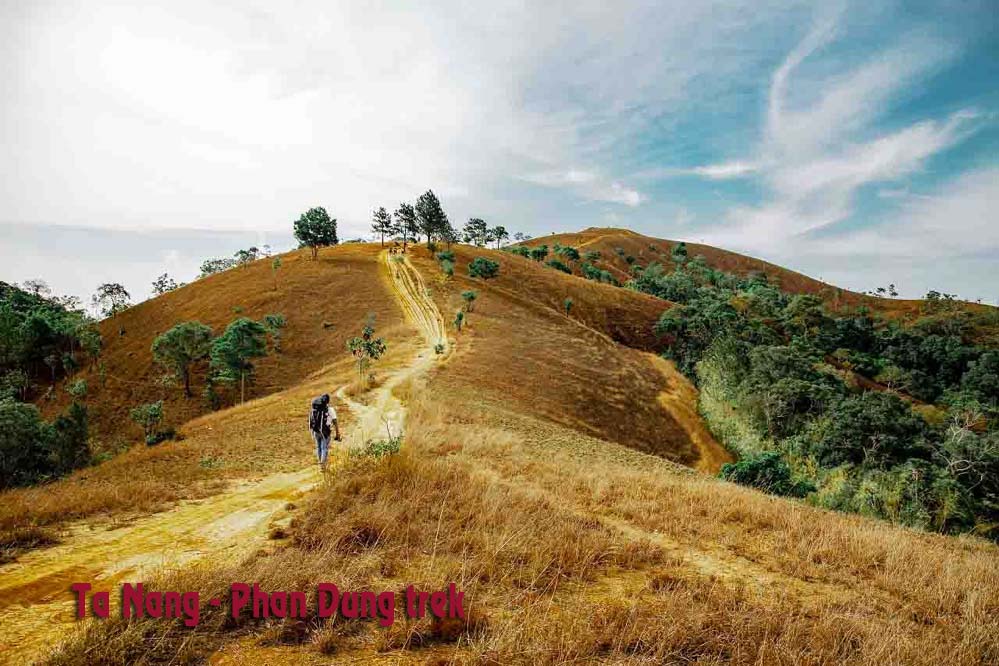
The deeper we went, the more spectacular the scenery became. For the first time, I saw the lush green meadows glistening in the slanted sunlight, so beautiful that I could only exclaim, "It's like something out of a movie!" Despite our shirts being drenched in sweat, we eagerly pressed forward, only to be overwhelmed with joy when we reached the Ta Nang - Phan Dung stainless steel marker under the blazing sun.

As evening fell, we set up camp near Soldier Hill, a location that could be described as ideal. It was a flat piece of land atop a vast, sun-scorched hillside. From here, we could see the entire range of mountains and the open space before us. As the sun set, the whole group dispersed to admire the scenery and take photos. The last rays of sunlight bathed the grassy slopes in a warm hue.

As night fell, the camp lit up with lamps and campfires. A lively barbecue began. Amidst the idyllic mountain scenery, strangers, who had only met after a day's journey, quickly became close friends through stories, laughter, and shared drinks. It seemed that after sharing a journey together, the distance between people naturally shortened.

When the party ended, everyone went back to their tents. The day was sunny and dry, but the night was bitterly cold. In the middle of the night, I was suddenly awakened by the howling wind mixed with the sound of rain. As soon as I peeked out of my tent, the biting cold rushed in. Curled up in my thermal blanket, I fully appreciated the warmth amidst the freezing night on the deserted hilltop. Looking back, that night alone was worth the entire trip.

But that's not all. The sunrise in Ta Nang - Phan Dung is breathtakingly beautiful. The dew drops on the blades of grass seem to sparkle even more. Watching the sunrise, waiting for the sun to rise with my companions, and then sharing a bowl of hot noodles with plenty of braised pork ribs, I suddenly felt that my life was truly complete.

On the way back, we crossed dipterocarp forests and rocky areas, finally hopping onto fast-paced motorbike taxis to leave the Phan Dung forest. Then came the night bus back to Ho Chi Minh City. To this day, that trip during the mixed grass season remains a beautiful and emotionally rich memory for me.

Source: https://impressivevietnamtravel.com/blog/unforgettable-journey-through-ta-nang-hills.html

Experience tranquility at Phu Cuong waterfall

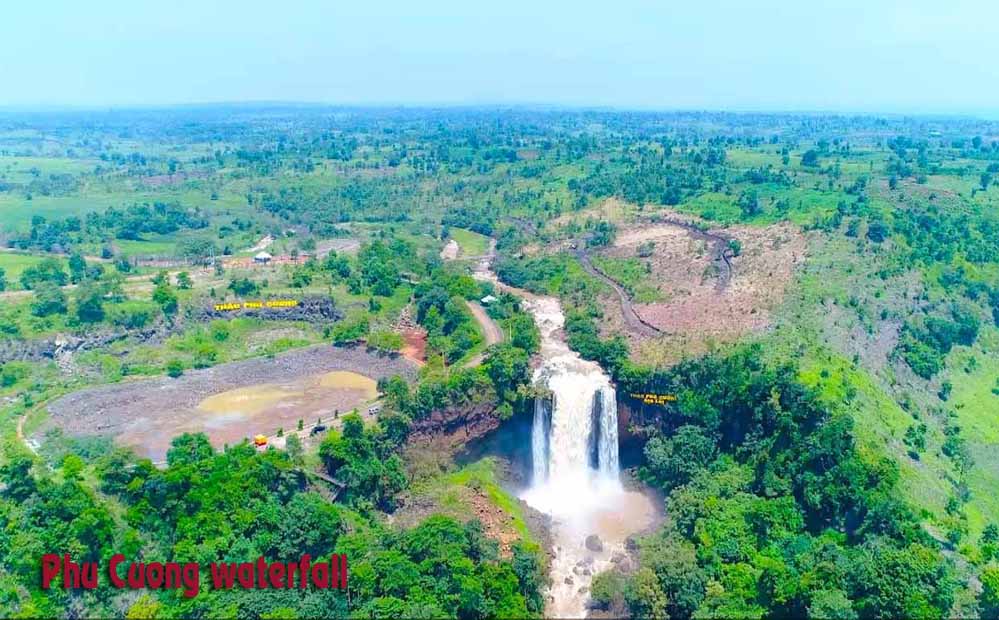
Ethnic Travel - Nestled amidst the lush green forests of Chu Se commune (Gia Lai province), Phu Cuong waterfall, approximately 45 meters high, stands out with its cascading white water plunging from a basalt cliff, creating a majestic scene in the Central Highlands. It's an ideal destination for nature lovers and those seeking ecotourism experiences.


Phu Cuong Waterfall is located about 45 km from the center of Pleiku city. The road leading to the waterfall winds through the mountains and forests, opening up a peaceful space before the distant sound of cascading water signals the arrival of this majestic destination. Visitors can stroll on the stone steps, walk along the tree-shaded trails, and enjoy the fresh air and vibrant sounds of the mountains and forests.

Nestled on the rocky foundation of an extinct volcano millions of years ago, the Phu Cuong waterfall area bears the distinctive geological imprint of naturally stacked black and gray rock formations, creating a wild and fascinating beauty. The water originates from the La Peet stream upstream, then merges with the Ayun River, contributing to the formation of the area's unique ecosystem.

At the foot of the waterfall, cool water flows through the crevices of rocks and lush green vegetation, creating a pristine natural space, characteristic of the basalt land of the Central Highlands.

The firsthand experience here left a lasting impression on visitors. John Smith (a tourist from the US) excitedly said: "Standing in front of the waterfall, I was truly impressed. Everything here is so pristine, peaceful, and completely different from places I’ve been to before. The sound of the water and the cool air made me feel relaxed immediately. I came here during the National Tourism Year - Gia Lai 2026, so I had many interesting experiences. When I return home, I will definitely tell my family and friends about the beauty of this place, a destination well worth exploring".

The waterfall's beauty changes with the seasons. During the rainy season, from May to October each year, the water cascades down forcefully, creating a white foam, and the sound of the waterfall echoes through the mountains, leaving visitors in awe. During the dry season, from November to April, the flow is gentle, the water clear and blue, ideal for relaxing excursions and picnics. Visitors can follow the trail at the foot of the waterfall to reach the area behind the water and better appreciate the majestic beauty of nature.

According to Lanh, a tour guide in Gia Lai , "Phu Cuong Waterfall is one of Gia Lai's outstanding destinations. Every time visitors return, they are amazed by the pristine and majestic beauty of the waterfall. If it were connected to other eco-tourism routes, the waterfall would be even more attractive. Visitors should wear sports shoes, prepare comfortable clothing, bring drinking water, and maintain general hygiene during their visit."

The local residents, those living near the waterfall, regularly contribute to preserving the landscape of this destination. Ms. H'Lan (a Jrai ethnic minority from Chu Se commune) said: "Phu Cuong Waterfall has been a part of my life since I was a child. I remember walking around the waterfall area early in the morning, listening to the gentle sound of the flowing water, feeling the cool air, and admiring the lush greenery. When tourists come, I always remind them to maintain cleanliness and respect the landscape so that the waterfall remains beautiful and pristine as it was in my memories. For me, the waterfall is not only a beautiful sight but also a place that reminds me of the close relationship between humans and nature".

Le Huu Thien, Head of the Culture and Social Affairs Department of Chu Se Commune, commented: "Phu Cuong Waterfall is an important resource for developing ecotourism in the commune. Currently, the locality is aiming for sustainable exploitation, both showcasing the beauty of the waterfall to tourists and preserving nature. The commune has been implementing measures such as forest conservation, water source protection, and guiding tourists to maintain general hygiene. I hope Phu Cuong Waterfall will become a prominent destination, where tourists can both enjoy the beautiful scenery and appreciate the natural and cultural values of the plateau".

Amidst the vibrant atmosphere of the National Tourism Year - Gia Lai 2026, Phu Cuong Waterfall (Chu Se commune, Gia Lai province) is gradually asserting its position on the tourism map of the western part of the province. With its magnificent scenery, fresh air, and unique natural and cultural values, it promises to become an attractive destination, contributing to spreading the beauty of the highland mountains and forests.

Source: https://ethnictravelvietnam.com/blog/discovering-phu-cuong-waterfall-in-central-highlands/

Friday, February 13, 2026

Traveling for inner peace as a new cultural habit

Package Vietnam Tours - Instead of celebrating Tet in the traditional way, more and more families and middle-aged people in the northern region are choosing to travel for relaxation, visit temples and pagodas at the beginning of the year to pray for peace, recharge their energy, and balance their spirits.


Travel agencies report a clear shift in tourism trends for the 2026 Lunar New Year holiday. While in the past, Tet holiday tourism focused primarily on sightseeing and entertainment, now tourists prioritize tranquil, slow-paced, and immersive journeys, linked to relaxation, spirituality, and nature.

Ms Diem from 5S Travel said that people in the northern region are no longer overly fond of long, crowded trips or complicated travel arrangements. Instead, they prefer destinations that are not too noisy and have cultural, spiritual, and ecological elements.

"Traveling during Tet (Lunar New Year ) is no longer just about leisure, it's about fulfilling a spiritual need. People travel to find inner peace, pray for blessings and good fortune, and recharge their energy after a year of stress" Ms. Diem said.

Popular product lines include spring excursions to temples and pagodas such as Yen Tu , Ngoa Van, Bai Dinh, Tam Chuc, and Tay Thien; eco-tourism in mountainous areas like Sa Pa, Moc Chau, and Cao Bang - Ba Be; or relaxation combined with meditation, mindfulness, and healing experiences.

In particular, middle-aged people, multi-generational families, and business people make up a large proportion of tourists during the Tet holiday season. Many combine their vacation with a pilgrimage to pray for peace, wealth, and good health at the beginning of the year.

This year, tourists are prioritizing journeys that are "quiet, slow, and profound," linked to relaxation, spirituality, and nature.

Regarding pricing, according to Ms. Diem, traditional Tet tours often have peak season surcharges due to increased transportation, hotel, and personnel costs. Prices can be 1.5–2 times higher than on regular days.

However, in recent years, the market has seen a trend towards stimulating demand. Many hotels and resorts have reduced or eliminated Tet holiday surcharges; travel agencies are designing short-day tours and optimizing costs to keep prices reasonable.

As a result, tour prices are quite diverse: from high-end options with 4-5 star resort services to mid-range tours and cost-effective experiential tours for families. According to businesses, customers today are not only interested in low prices but also prioritize service quality and the emotional value they receive after the trip.

Traveling at the beginning of the year is therefore no longer just a trendy choice, but is gradually becoming a "new cultural habit".

Sharing the same view, Mr Hung from Hung Viet Travel - said that the trend of health and wellness retreats at natural hot spring locations such as Tram Tau, Van Chan, Tu Le... continues to grow positively during this year's Tet holiday, especially in the period before and after Tet with short trips of 2-3 days suitable for families and small groups.

According to travel businesses, with the shift in mindset regarding enjoyment and mental well-being, tourism during Tet (Lunar New Year) is predicted to continue its strong growth in the coming years. As income and quality of life improve, people are willing to spend on trips that offer experiential value and spiritual meaning, rather than just material consumption. Therefore, traveling at the beginning of the year is no longer just a trendy choice but is gradually becoming a "new cultural habit" for many Vietnamese families, where the Tet holiday is not only about reunion but also a journey to recharge, seek balance, and start the new year positively.

Source: https://packagevietnamtours.com/vietnam_news/new-trend-emerges-spiritual-journeys-mark-tet-holiday.asp

Explore Ho Chi Minh city and Can Gio by helicopter

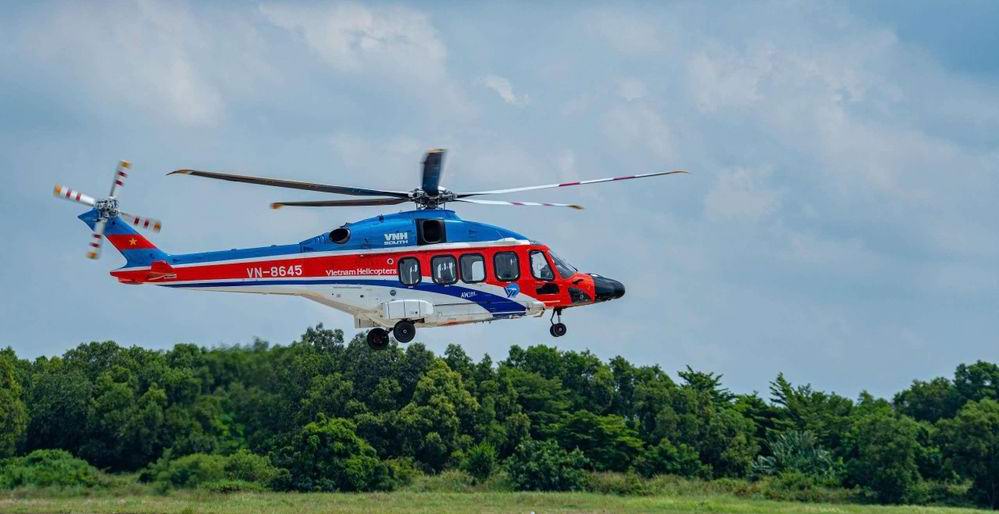
Vietnam day trips - After a period of interruption, helicopter tours offering aerial views of Ho Chi Minh City will officially resume operations from March 11, 2026, providing new experiences.


This product is a collaboration between Vina Group Travel and Southern Helicopter Company. The helicopter company provides the aircraft, crew, and adheres to all technical and aviation safety standards; the travel company is responsible for product development, customer reception, and flight scheduling.

The flights depart from Vung Tau Airport (30-4 Street, Tam Thang Ward). Four flight programs are designed with durations ranging from 15 to 60 minutes, catering to various groups of passengers.

These include a 15-minute panoramic tour of Vung Tau from above, priced from 2.9 million VND (about 110 USD) per person. There's also a 30-minute tour connecting Vung Tau with the Can Gio Biosphere Reserve, and a 40-minute flight along the Long Hai - Ho Tram coastal route.

The longest tour is 60 minutes long, connecting Vung Tau beach with the central area of Ho Chi Minh City, combining observation of the Can Gio ecological zone and urban landscape.

The longest tour is 60 minutes long, connecting Vung Tau beach with the central area of Ho Chi Minh City.

Mr Man from Vina Travel, said that each flight route is designed according to a landscape theme, allowing passengers to simultaneously observe the sea, mangrove forests, and urban areas from an altitude of hundreds of meters.

Flights utilize civilian helicopter models such as the EC-155B1, AW189, EC-225, or Super Puma L2, depending on actual operating conditions.

The service offers two seating packages: an 8-seat package (minimum 8 passengers required) and a 12-seat package (minimum 10 passengers required). Tour prices range from 2.9 to approximately 18 million VND per passenger, depending on the itinerary and seating location.

Flights are scheduled to depart at 9:00 AM and 3:00 PM on Fridays, Saturdays, and Sundays, provided the minimum number of passengers required for operation is met.

Source: https://vietnamexcursions.com/vietnam-travel-news/helicopter-tours-over-ho-chi-minh-city-resume-in-march/

Friday, January 30, 2026

Transforming Perfume Pagoda into a vibrant tourist hub

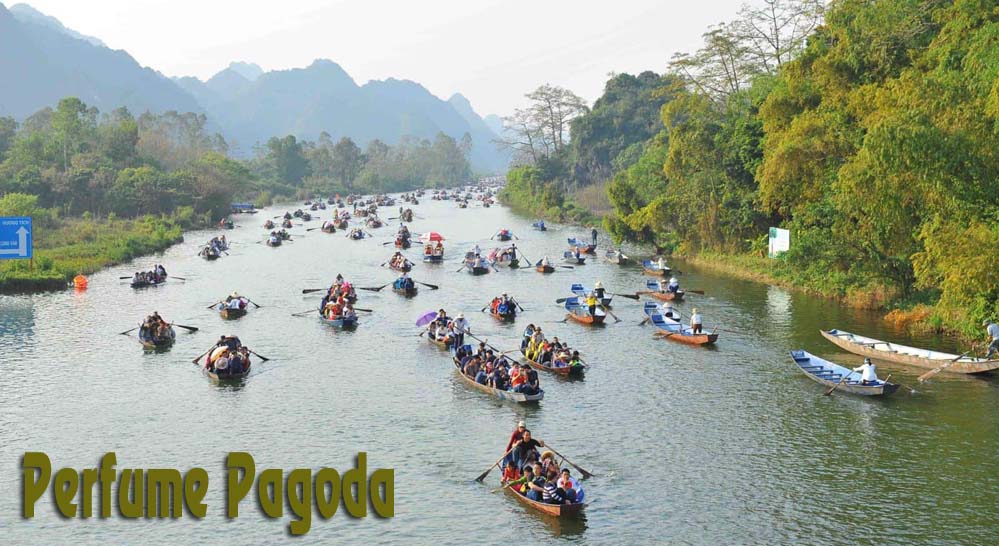
Footprint Travel - The Perfume Pagoda National Special Monument Complex (Huong Son scenic area) in Huong Son commune (Hanoi) is not only a typical cultural and spiritual space of the capital but also a destination with great potential. With a new approach and many specific solutions, Huong Son commune is now gradually shifting towards the goal of welcoming visitors year-round.


Many untapped opportunities remain.

The Huong Son historical and scenic site is a typical cultural and spiritual complex of Hanoi and the whole country. It was classified as a Special National Monument in 2017 and recognized as a city-level tourist area in 2024. With its outstanding historical, scenic, and religious value, it has long been a familiar destination for domestic and international tourists.

Every year, the Perfume Pagoda Festival takes place from the beginning of spring until the end of March in the lunar calendar, attracting tens of thousands of pilgrims and tourists, becoming one of the biggest festival highlights of Hanoi as well as the whole country. Beyond its cultural and spiritual significance, the festival also plays an important role in promoting the economic and social development of the locality.

According to data from the Huong Son Scenic Area Management Board, the number of visitors has fluctuated significantly in recent years. Statistics from the Huong Son Scenic Area Management Board predict that Huong Son will welcome over 860,000 visitors in 2025. However, in reality, tourism in Huong Son has remained largely seasonal, peaking during festivals, while remaining relatively quiet during the rest of the year. The challenge is how to more effectively exploit existing values and gradually transform Huong Son into an attractive year-round destination, rather than just a vibrant destination during the short festival season.

Regarding the limitations preventing Huong Son tourism from fully exploiting its potential, Vice Chairman of the People's Committee of Huong Son commune - stated that the shortcomings include inadequate and degraded transportation infrastructure , limited parking and boat docks, a lack of diverse tourism products, insufficient interconnected tour routes, and unprofessional promotion and digital technology application. Accommodation and food services are seasonal; and the local community has not yet fully embraced innovation trends and professional service standards.

Opportunity for a breakthrough

With tourist numbers still concentrated mainly during the festival season, Huong Son commune's overarching strategy is to effectively exploit its tourism resources, focusing on cultural and spiritual tourism linked to sustainable development. With a new approach and many specific solutions, Huong Son commune is gradually shifting towards the goal of welcoming visitors year-round, exploiting the expansive tourism space throughout the area with its rich system of historical sites such as the Perfume Pagoda route, Thanh Son Pagoda, Huong Dai Cave, Long Van Pagoda, Cay Khe Pagoda, Ancient People's Cave, and Tuyet Son Pagoda.

In the coming time, the locality will continue to implement many comprehensive solutions to renew products and enhance the attractiveness of the destination. The focus will be on developing unique seasonal tourism products, including the Perfume Pagoda experience program during the frangipani flower season. At the same time, a unified, easily recognizable, and widely disseminated brand identity for Perfume Pagoda tourism will be developed. Cuisine is identified as an important resource that needs to be systematically exploited and promoted, linked to the local agricultural products, creating unique culinary experiences for tourists.

Contributing to the development of tourism at Perfume Pagoda, he suggested creating one-day or two-day package tours suitable for international tourists. The local government is ready to promote the image of Perfume Pagoda to the international market through experiential tours combining sightseeing at Yen Stream, visiting Thien Tru Pagoda, experiencing traditional peanut candy making, and harvesting and using local medicinal herbs. A product needs to be clear and in-depth enough to tell the story of the destination.

According to Hanoi Department of Tourism, Perfume Pagoda has recently undergone significant and comprehensive changes, reflected in the renovation of its space and innovations in the management and administration of the destination. Following the initial renovation process, Huong Son commune will continue to invest in depth in Perfume Pagoda, ensuring the synchronized development of infrastructure, products, and service quality.

From the initial steps in beautifying and innovating destination management, it is clear that Huong Son is facing a breakthrough opportunity to more clearly define its year-round tourism development strategy, linking heritage preservation with enhancing the visitor experience.

For Perfume Pagoda to truly become a year-round destination, the journey of revitalization shouldn't just stop at refreshing products or renovating spaces. It requires the sustained collaboration of the government, businesses, and local communities in preserving the landscape, improving service quality, and telling the heritage story in an attractive and modern way. When cultural, spiritual, natural, and culinary values are harmoniously, deeply, and responsibly explored, Perfume Pagoda will not only be a pilgrimage site in early spring but will gradually become a year-round destination for experiences.

Source: https://footprintvietnamtravel.com/news/transforming-perfume-pagoda-into-a-vibrant-tourist-hub.php

Discovering the hidden charm of Bac Hoa hamlet in Bac Giang

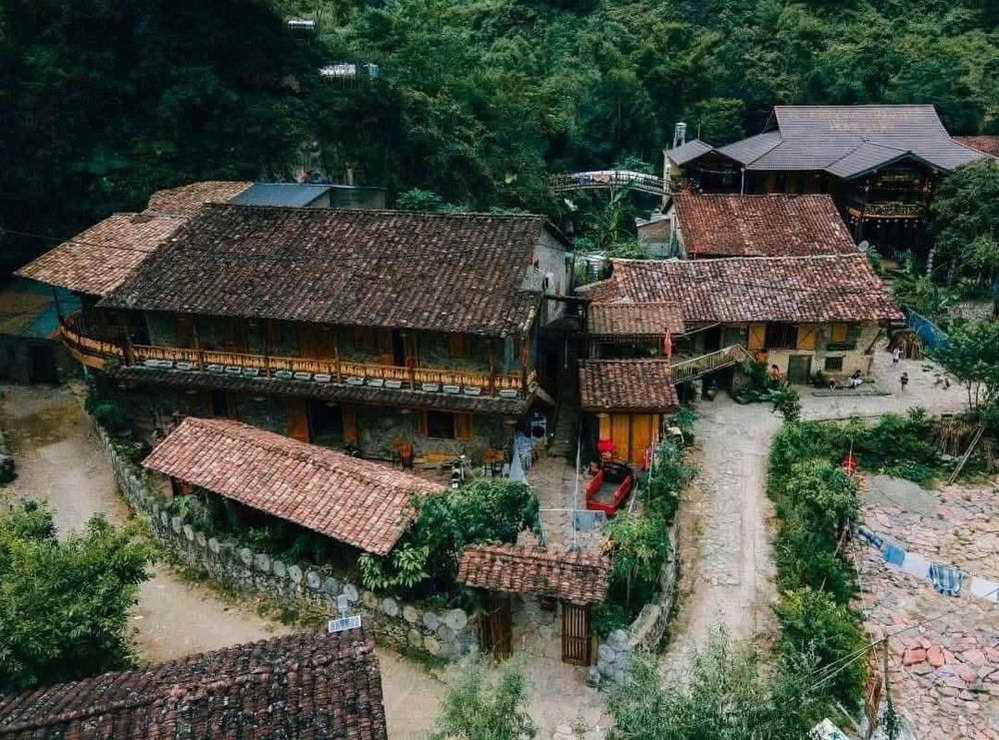
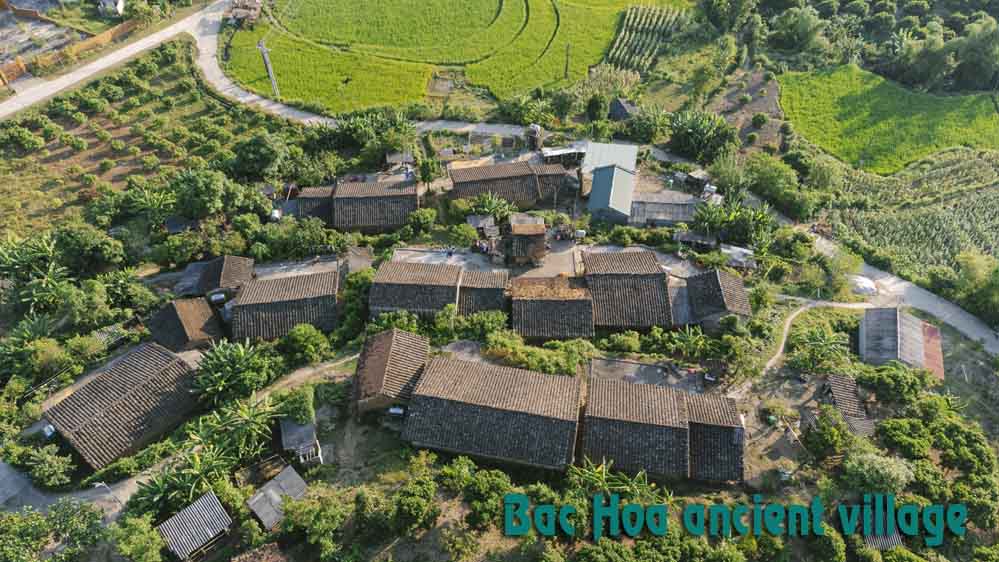
Asiatica Travel - Bac Hoa, the name of a beautiful village, is the first impression of a land that further attracts travelers from afar. Bac Hoa belongs to Tan Son commune, Luc Ngan district, Bac Giang province - a place where small houses with earthen walls and charming yin-yang tiled roofs nestle against the lush green hillsides, belonging to the Nung ethnic people.


The journey from Bac Giang city to Bac Hoa takes about an hour by car. The route from Bac Giang city to Bac Hoa via the Tay Yen Tu spiritual route is quite convenient (except for the currently degraded section of Highway 31). After arriving at Chu town, continue on Highway 31 to the Kep intersection in Hong Giang commune, then turn onto Provincial Road 290, travel about 15km, and then continue for about 7km on Highway 279, the section connecting Bac Giang to Dinh Lap district in Lang Son province. Passing through the center of Tan Son commune, Luc Ngan district – where the Tan Son love market is held annually – turn off Highway 279 and travel about 2km on the paved road to reach Bac Hoa.

Bac Hoa is as beautiful as a mountain girl, simple, rustic, and poetic… Along the road are lush green hills, with houses hidden among rolling hills of lychee trees. Standing out against the verdant hills are the houses with their yin-yang tiled roofs, leaving a lasting impression on those who have the chance to visit Bac Hoa. Right along the main road into the village are rows of ancient houses with earthen walls, making everyone want to stop and admire them. Seventeen families live here, mostly relatives, forming a small hamlet. The houses are almost seamlessly connected; you can step directly from one house to another, or the boundaries are only marked by shared pathways, hedges of trees and stacked stones, or patches of wildflowers… All 17 families here still maintain the traditional style of earthen-walled houses with yin-yang tiled roofs, evoking a connection between the present and the past.

Beside the traditional earthen house, Mrs. Vi Thi Them, an 80-year-old woman from the village, still sits by her loom weaving indigo-dyed scarves to sell to her ethnic group for use during spring festivals… This image evokes the idea that traditional cultural values will endure through time. In Bac Hoa, there is also a Slong Hao singing club with over 30 members. Mr. Lang Quoc Ky, the vice chairman of the club, said that the club still holds activities and exchanges, and every year, in the first two months of the year, the club members dress up in their traditional costumes and go to Tan Son market to participate in the singing festival, preserving the culture of their ancestors.

The entire Bac Hoa village has over 160 households, 100% of whom are Nung people. The villagers live scattered across the hillsides, cultivating agriculture, growing fruit trees, and a small area of rice and short-term vegetable crops. The lives of the villagers have gradually improved over the years, but traditional culture has faded somewhat. In recent years, there has been increased awareness of preserving traditional culture. The village now has a Slong Hao singing club, and the teaching of folk songs has become more conscious among the villagers. During spring festivals, the sight of people wearing indigo shirts and scarves at the market creates a unique atmosphere of the highland market. The traditional houses with yin-yang tiled roofs are also preserved by the villagers.

Mr. Vi Van Cheo, head of Bac Hoa village, said: "Recently, Bac Hoa has received many visitors, including researchers exploring the culture and tourists who appreciate the scenery and people of Bac Hoa. Most visitors share the same feeling about Bac Hoa's beauty and hospitality. Tourists are quite interested in the tour experiencing the fruit orchards, the traditional Chu noodle production village, and Bac Hoa. However, the services here are not yet diverse, so visitors can only come for a day trip and there are no services for overnight stays. This is also a concern for the tourism industry in Bac Giang and Luc Ngan district..."

To attract tourists to Bac Hoa and other potential destinations in Luc Ngan, comprehensive investment in infrastructure, accommodation, and accompanying tourism products and services is essential. Simultaneously, a strategy to enhance the image and promotion of these destinations is needed so that Luc Ngan in general, and Bac Hoa in particular, become widely known to tourists.

Source: https://asiaticatravel.com/travellers-eyes/exploring-the-unspoiled-beauty-of-bac-hoa-ancient-village.asp

Sunday, January 25, 2026

Free entrance tickets await at Son Tien tourist city

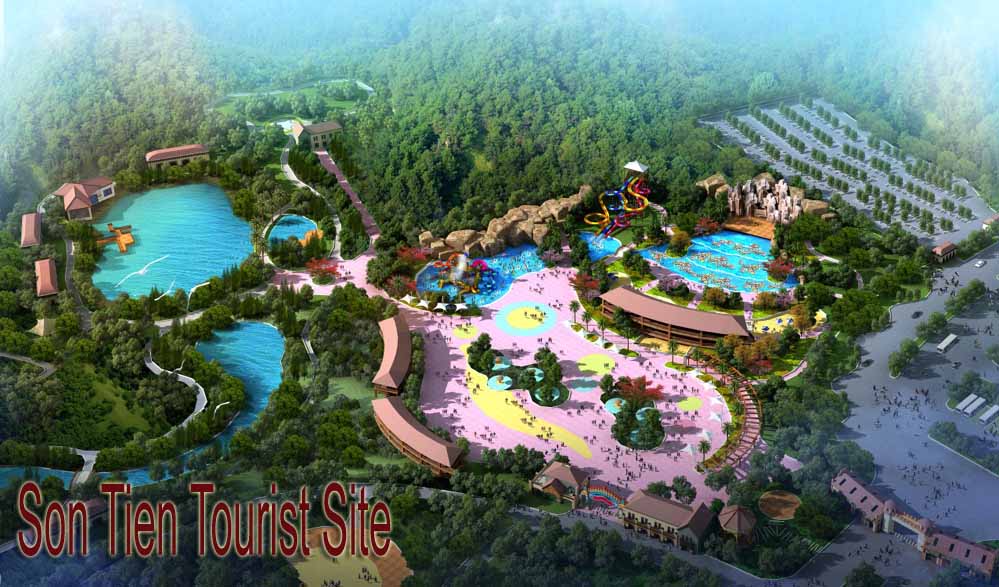
Vietnam Impressive Travel - To celebrate the opening of the Southeast Vietnam tourist area, Son Tien tourist city (Dong Nai province) is giving away 20,000 free entrance tickets and free train rides to visitors.


Amidst the growing demand for relaxing spaces close to nature, Son Tien's promotional program has become a focal point. With 20,000 vouchers offering free entrance tickets and train rides, Son Tien aims to provide a meaningful gift to visitors from January 10th to February 16th. This is an opportunity for locals and tourists to experience this "green oasis" spanning over 50 hectares without any cost.

The Southeast Vietnam Tourist Area impresses with its more than 50 hectares of land, where trees cover the pathways and interwoven landscaped lakes create a cool ecosystem year-round. Instead of walking, visitors can leisurely ride on modern trains to tour the lush green Southeast Vietnam, admiring the abundant beauty of this southern region.

This is the ideal destination for weekend strolls or family picnics. Free from noise and pollution, here you'll find only the gentle breeze and the subtle fragrance of plants and trees, giving you a true sense of returning to nature the moment you arrive.

One of the most popular activities here is visiting and experiencing fruit picking directly from the orchards. With nearly 100 varieties of fruit trees cultivated using organic technology, visitors can personally harvest fresh, delicious seasonal fruits such as peony grapes, American figs, golden star apples, French black candy grapes, red-fleshed jackfruit, rambutan, ST plums, etc.

Besides experiencing the orchards, visitors can participate in a variety of exploratory activities: stroll or cycle on the 8.2 km long pedestrian bridge winding through the trees, enjoying the panoramic view of the vast green space. In addition, kayaking, swan pedal boating, or canoeing on the picturesque lakes also attract many visitors.

At Son Tien, the diverse range of restaurants, serving everything from rustic Southern Vietnamese specialties to authentic Asian and European cuisine, is ready to satisfy every diner, providing moments of complete enjoyment and "recharging" for a day of exciting activities.

With its convenient location on National Highway 51 and green spaces, Son Tien tourist city in the Southeast region promises to be an attractive destination for tourists in the near future.

Source: https://impressivevietnamtravel.com/news/detail/666/discover-green-oasis-of-son-tien-in-dong-nai.html

Unlock Tho Chu island potential with new ferry service

Ethnic Travel - The Phu Quoc to Tho Chu high-speed sea transport route has officially commenced operations, helping to shorten travel time between the two islands and creating more favorable conditions for travel, tourism, and trade.


The route is operated by Superdong - Kien Giang High-Speed ??Ferry Joint Stock Company using the Superdong V vessel, with a total tonnage of 85 tons and a capacity of 275 passengers. The vessel operates from Monday to Saturday every week, with a frequency of one trip per day.

According to the schedule, the outbound trip from Phu Quoc operates on Mondays, Wednesdays, and Fridays; the ship departs from Bai Vong port at 10:30 AM. The return trip from Tho Chu operates on Tuesdays, Thursdays, and Saturdays; the ship departs from Tho Chu Inland Waterway Port at 8:00 AM.

With this high-speed ferry service, travel time between Phu Quoc and Tho Chu is shortened to approximately 2 hours and 30 minutes per trip, covering a distance of over 60 nautical miles; the ticket price is 330,000 VND for adults and 240,000 VND for children.

According to the People's Committee of Tho Chu Special Economic Zone, the launch of the high-speed ferry service aims to meet the increasing demand for transportation, facilitate the transport of goods, develop tourism and services, and serve the medical, educational, and work needs of the people, officials, and soldiers on the island.

Previously, travel between Phu Quoc and Tho Chu relied mainly on the infrequent Tho Chu 09 ferry, which had long journey times and was frequently interrupted due to weather conditions in the Southwest Sea.

Improved connectivity is expected to open up opportunities for the development of island and coastal tourism, making it easier for tourists to access Tho Chu Island - an island that still retains much of its pristine beauty - while also promoting the transportation of seafood, agricultural products, and consumer goods, contributing to reduced logistics costs and creating momentum for the development of the marine economy in the region.

Source: https://ethnictravelvietnam.com/Travel-News/high-speed-ferry-service-bridges-phu-quoc-and-tho-chu-islands/