Tuesday, July 28, 2026

Exploring H'mong King Legendary Mansion and Legacy in Ha Giang

Vietnam day trips - The life of King of the H'mong, Vuong Chinh Duc, who ruled the Dong Van Stone Plateau for so long, remains shrouded in mystery and legend.

The King of the H'mong, also known as the H'mong King, was a spiritual leader or "lord" of the H'mong community in certain regions of Vietnam, China, and Laos before the August Revolution.

Before the August Revolution in 1945, Vuong Chinh Duc was the king of the H'mong people, with a powerful dynasty that controlled the entire northernmost region of present-day Vietnam, with a population of up to 70,000. Vuong Chi Sinh, his second son and successor before 1945, faced much pressure from various factions. However, Vuong Chi Sinh did not side with the French or Chiang Kai-shek, but wanted to build Dong Van into an autonomous kingdom of the H'mong people.

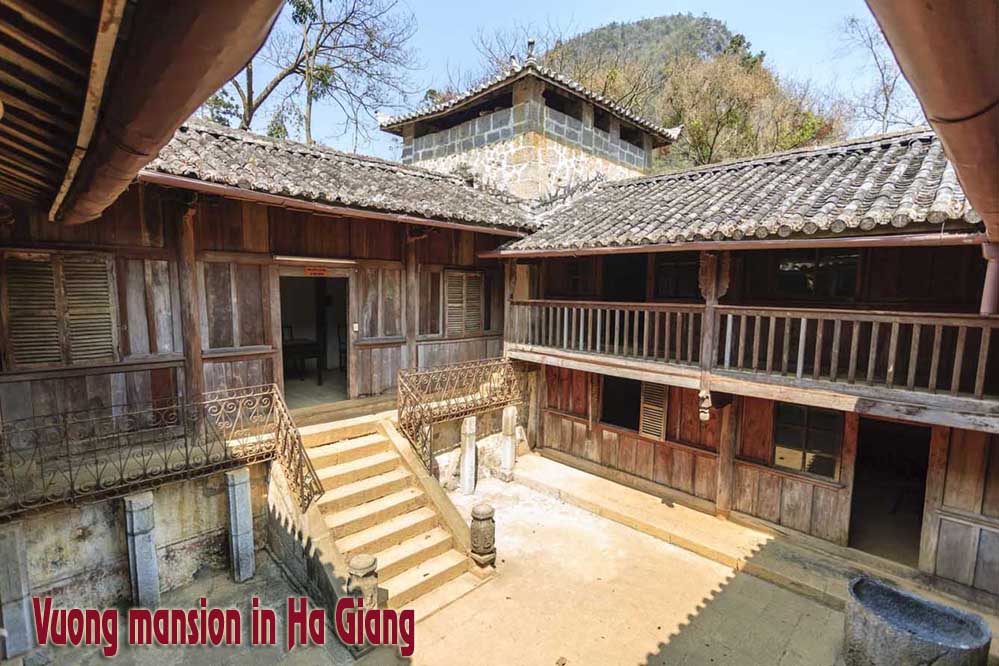
The house of the "King of the H'mong", also known as the Vuong family mansion, covers nearly 3,000 square meters and is situated on a hill shaped like a turtle, surrounded by mountains and forests in the Sa Phin valley, Dong Van district, Ha Giang province. The road leading to the mansion is lined with lush green cypress trees, imported from China. The mansion was built from 1919 and completed in 1928, costing 150,000 Indochinese silver coins at the time, equivalent to 150 billion VND today.

To build the mansion in Sa Phin, in 1890 Vuong Chinh Duc invited a Han Chinese geomancer named Truong Chieu to find a suitable location. After searching throughout Dong Van, Truong Chieu finally chose Sa Phin as the site. The geomancer explained that in the middle of the Sa Phin valley, a hill shaped like a turtle rose up, surrounded by high mountains. Building a house on the turtle's back would bring wealth and prosperity for life.

Behind the turtle-shaped landmass is a mountain range shaped like an armchair, offering space to stretch one's legs. To the right and left are high mountains. In front are two mountains symbolizing literature and martial arts, standing in attendance. Behind these two mountains is a mountain range that stretches across like a winding dragon. Truong Chieu concluded, "This is the land where heroes reside".

The mansion's architecture was influenced by three main cultures: H'mong, Chinese, and French. The mansion has four horizontal buildings, six vertical buildings, and three sections (front, middle, and back) with a total of 64 rooms accommodating 100 people. The walls are constructed of blue stone, the roofs are made of pine wood, and covered with terracotta tiles.

From the very beginning of its construction, Vuong Chinh Duc calculated that this would serve as both a residence and a fortress capable of effective defense, combat, and withstanding the harsh natural conditions of this high mountainous region. Inside, there were also food and weapons storage facilities prepared for any worst-case scenario should a battle occur.

In 1945, President Ho Chi Minh sent Hoang Viet Hung from Cao Bang to Sa Phin to persuade Vuong Chinh Duc to join the revolution to fight the French, Japanese, and Chiang Kai-shek's forces. President Ho Chi Minh then sent a letter inviting Duc to Hanoi. However, due to his advanced age, Duc sent his son, Vuong Chi Sinh, to meet him instead.

Upon arriving in Hanoi, Mr. Vuong Chi Sinh became sworn brothers with President Ho Chi Minh, and was given the name Vuong Chi Thanh. At the ceremony, Vuong Chi Sinh pledged his determination to follow President Ho Chi Minh in protecting the land of Dong Van and leading the H'mong people to join the Viet Minh. He promised to return Dong Van to President Ho Chi Minh after defeating the French and expelling the Japanese. Mr. Sinh later served as a delegate in the first National Assembly and as Chairman of Dong Van District.

When President Ho Chi Minh issued the call for nationwide resistance in 1946, and the national treasury was depleted, Vuong Chi Sinh donated 2.2 million silver coins and 7 kg of gold to the government.

That same year, to affirm his affection and trust, President Ho Chi Minh sent Mr. Bui Cong Truong with two mementos - a military uniform and a sword - to present to Mr. Vuong Chi Sinh. The sword, forged by the Viet Bac military workshop, bore the inscription "Utmost loyalty to the nation". "Not to be enslaved".

Source: https://vietnamexcursions.com/vietnam-travel-news/inside-the-life-and-legacy-of-the-hmong-king-who-ruled-northwest-vietnam/

Thursday, July 2, 2026

Hon Son Island - A rising coastal gem

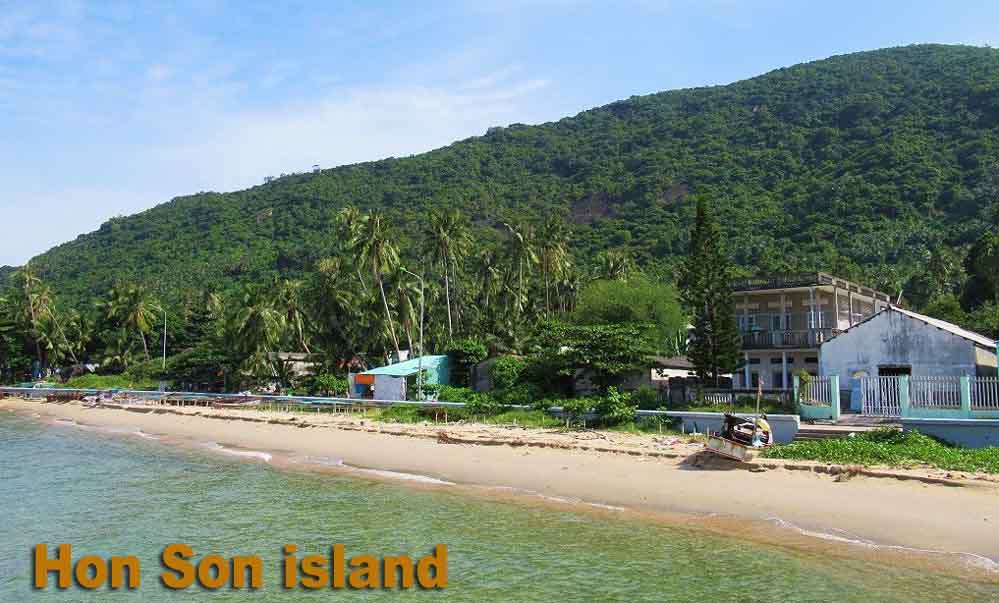
Footprint Vietnam Travel - Hon Son Island, part of the Kien Hai Special Economic Zone, is one of the most frequently mentioned destinations in An Giang tourism experiences. It's known as an ideal resort and picnic spot for short getaways. During the summer, this beautiful island becomes vibrant, a favorite choice for many tourists craving a bit of "vitamin sea".


Hon Son Island boasts many beautiful beaches such as Bai Bang, Bai Nha, Bai Gieng, Bai Bac... Among them, Bai Bang is a favorite with tourists for its fine white sand, clear blue water, and peaceful scenery. It is also one of the ideal spots to watch the sunrise and sunset on the island. In the early morning, when the first rays of sunlight gradually appear on the sea, the scenery here becomes poetic, bringing a sense of relaxation to visitors.

Besides its natural landscapes, Hon Son Island also boasts many ancient spiritual destinations such as the Ba Co Chu Temple, the Nam Hai Dai Tuong Quan Mausoleum, the Lai Son communal house, and the Hai Son Pagoda, enriching visitors' exploration journeys. While on Hon Son, visitors shouldn't miss the opportunity to enjoy delicious fresh seafood dishes like garlic-fried mantis shrimp, grilled sea urchin, steamed crab with ginger and lemongrass, herring salad, sour fish soup, oyster porridge, and grilled barracuda. ??Experiential activities such as night squid fishing, fishing, driving around the island, or watching the sunset also offer many memorable experiences.

According to statistics, in the first six months of 2026, the Kien Hai Special Economic Zone welcomed nearly 365,000 visitors. Lai Son (Hon Son) alone received over 156,600 visitors, including more than 2,200 international tourists. These figures demonstrate the growing appeal of Hon Son on the regional map of coastal and island tourism . Ms. Nguyen Thi Thu Trang, residing in My Thoi ward, chose Hon Son for her family's 3-day, 2-night vacation. Trang said: "Although we have been here many times, my family still enjoys returning to this beautiful island. Besides swimming, we also rented boats to fish for squid and fish, and enjoyed fresh seafood. Each visit brings very memorable experiences".

Summer is also the time when many accommodations operate at full capacity. Hotels and homestays located near the beach or with private beaches are often fully booked very early, especially on weekends. Mr Nhan, owner of Phuong Nam guesthouse, said: "On weekends during the summer, the guesthouse is fully booked. Many guests have already booked rooms until August since the beginning of summer. Despite the high number of guests, we haven't increased prices; instead, we focus on improving the quality of service to ensure tourists have a perfect vacation".

Mr San, from Hon Son Xanh Company said, in recent years, during holidays, Tet (Lunar New Year), and peak summer seasons, Hon Son Island often experiences overcrowding due to a sharp increase in visitors. Therefore, tourists should book rooms about a month in advance and also book round-trip ferry tickets to have a more flexible schedule. "Tourists come to Hon Son mainly to experience the coastal road around the island, swim, squid fishing, and enjoy seafood. Although the number of tour bookings is quite high, we still strive to provide the best possible experience".

Despite its existing advantages, Hon Son still has some issues that need to be addressed soon. Mr Tuan Anh from Can Tho city, commented: "Hon Son has beautiful beaches, fresh seafood, friendly people, and relatively affordable costs. What I most hope for is that the problem of ticket scalpers and hoarders is completely resolved. Currently, many tourists find it difficult to buy tickets at the listed price and are forced to buy through intermediaries at higher prices".

According to People's Committee of Kien Hai Special Economic Zone, during the peak summer season, the number of tourists visiting Hon Son and Nam Du increases sharply. To ensure safe and civilized tourism activities, the locality focuses on promoting civilized conduct in tourism; mobilizing people and businesses to build the image of Kien Hai as a destination that is "safe, friendly, and responsible".

The special economic zone is intensifying inspections of accommodation establishments, passenger transport vehicles, and tourist ships and boats; requiring public price listing, ensuring food safety and environmental hygiene; launching a campaign to reduce plastic waste; and establishing a rapid response team to promptly receive and handle feedback from tourists.

Source: https://footprintvietnamtravel.com/news/explore-the-charm-of-hon-son-island.php

Rough guide to wildlife and views of Bach Ma National Park

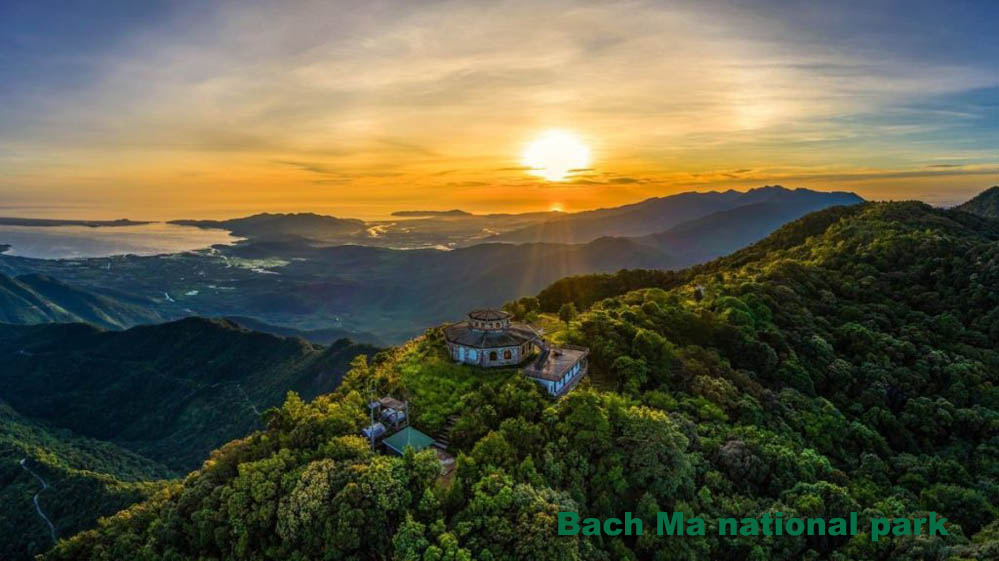
Asiatica Travel Vietnam - Bach Ma National Park (Phu Loc commune, Hue city) - where the majestic Truong Son mountain range stretches closest to the East Sea, lies on the natural border between North and South Vietnam.


This place is blessed by nature with exceptional values in terms of landscape, climate, and a unique ecosystem, unlike any other in Indochina. From the Vong Hai Dai viewpoint on the summit of Bach Ma Mountain, over 1,400 meters above sea level, one can see the entire Cau Hai Lagoon, Tam Giang Lagoon, the East Sea , and the endless green forests of the Truong Son mountain range.

Today, Bach Ma is known as one of the national parks with the highest biodiversity value in Vietnam.

Biodiversity treasures in the Truong Son mountain range

The journey for this land to be identified, studied, and preserved is a story spanning more than a century, intertwined with many important historical milestones of the country.

According to Bach Ma National Park, since ancient times, the Bach Ma mountain range has served as a green wall protecting the coastal plains of Central Vietnam. The pristine forests here are an important water source for major river basins, while also creating a magnificent landscape closely associated with the lives of the local communities. Therefore, Bach Ma has attracted the attention of many renowned scientists.

The extensive botanical, zoological, and physical geography surveys conducted throughout the early decades of the 20th century contributed to the inclusion of Bach Ma Mountain in numerous important scientific works on Indochina.

Botanists such as Eugene Poilane, François Gagnepain, and Pierre Lecomte collected thousands of rare plant specimens from the central region, many of which were recorded from the Bach Ma mountain range.

In the field of zoology, Jean Theodore Delacour and Pierre Jabouille conducted many important studies on the forest bird fauna of Central Vietnam.

Records of endemic bird species, including the White-crested Pheasant, have further affirmed the exceptional value of this ecosystem.

According to research conducted by Bach Ma National Park, the park is home to 1,728 species belonging to 54 orders and 266 families; of which, 70 species are listed in the 2007 Vietnam Red Book, 52 species are listed in the IUCN List (threatened with extinction) in 2016, and 15 species are endemic.

In addition, scientists have investigated and discovered 14 new species, naming them after the local areas. Several rare animal species have been recorded in the park, such as the blue-striped snake, white-tailed pheasant, peacock pheasant, pangolin, mountain goat, saola, etc.

In terms of flora and fungi, Bach Ma National Park has 2,421 species (accounting for nearly 17% of the total number of plant species in the country), including 74 species listed in the Vietnam Red Book, 20 species listed in the IUCN list, and 204 endemic species.

Notably, 10 new species have been discovered and named after the Bach Ma area. Several rare plant species thrive in the garden, such as Dalbergia tonkinensis, Diospyros melanosa, Terminalia chebula, Terminalia catappa, Terminalia catappa, and Terminalia chebula.

Bach Ma is protected not only by patrols but also by knowledge. Over the years, scientists, technicians, and research experts have made significant contributions to the discovery, documentation, and preservation of the Park's biodiversity values.

There were surveys lasting months, investigations that had to traverse the most treacherous areas, and data that took years to complete. Thanks to these efforts, many unique values of Bach Ma have been discovered and publicized. From the early days when there were many difficulties, Bach Ma National Park has gradually built a team of highly qualified, dedicated, and responsible staff.

Forest management and protection activities are becoming increasingly effective, scientific research is being promoted, international cooperation is expanding, and there is a focus on applying digital technology , environmental education, and ecotourism, all of which are gradually developing in a sustainable direction. These results form the foundation for Bach Ma to confidently enter a new phase of development.

Transforming biological resources into tourism advantages

Having just experienced a trip to Bach Ma National Park, Nhat, a photographer from Da Nang city, said: "Bach Ma National Park boasts a diverse ecosystem, many rare species of flora and fauna, and a cool climate year-round. In particular, the landscape here possesses a unique beauty, creating a sense of peace and tranquility, like a place for healing. Every moment of exploration left him with unforgettable memories".

Nhat hopes that the landslide-affected road will be repaired soon, the electricity system will be restored, and the old French villas will be renovated and preserved so that Bach Ma can better develop its tourism potential and attract more and more tourists to experience it.

According to the Bach Ma National Park Ecotourism, Resort, and Recreation Project for the period 2024-2030, Bach Ma National Park is planned to organize ecotourism activities at 12 locations and 14 ecotourism routes.

Activities are primarily located within the service-administrative zone and the ecological restoration zone; no recreational or leisure activities are permitted in the strictly protected zone.

According to the Director of Bach Ma National Park, immediately after the project was approved, Bach Ma National Park proactively implemented the selection of investors to lease forest land in phase 1 in 13 areas belonging to the approved ecotourism sites and routes.

As a result, the Park received 17 applications from 12 entities. After the evaluation process, 10 investors met the requirements, were ranked, and invited to negotiate contracts with a payment for forest environmental lease of no less than 1% of total revenue, along with specific commitments and solutions for forest and environmental protection.

In the coming period, Bach Ma National Park will focus on enhancing the visitor experience in conjunction with conservation; developing specialized tourism products, building the Bach Ma ecotourism brand, and strengthening environmental education through tourism.

Source: https://asiaticatravel.com/travellers-eyes/conservation-and-tourism-in-bach-ma-national-park.asp